EN
EN  es
es  ru
ru 
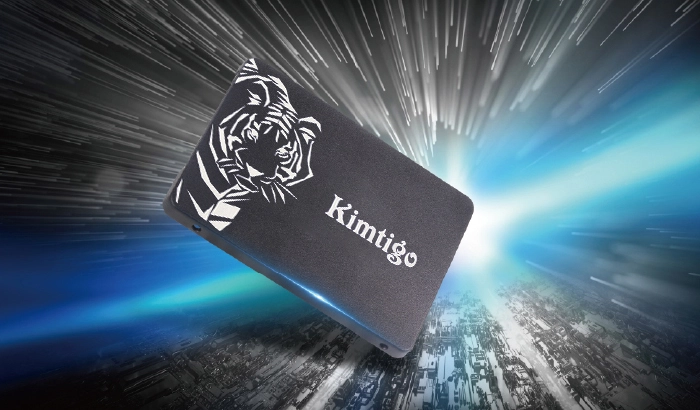
In recent years, cloud computing has become an important technology for businesses and individuals. It allows remote storage, management, and processing of data, providing enhanced accessibility and scalability. One key component that plays a crucial role in the success of cloud computing is solid-state drives.
A solid-state drive is a storage medium that uses flash memory to store data. Unlike traditional hard disk drives that use rotating disks and mechanical components, solid-state drives have no moving parts. This characteristic gives solid-state drives various advantages over hard disk drives, including faster access times, lower latency, and higher reliability.
One of the main advantages of solid-state drives in cloud computing is their outstanding performance. Without any mechanical parts, data can be accessed almost instantly, reducing response time and minimizing latency. This is particularly beneficial in cloud environments where multiple users access data simultaneously. With solid-state drives, cloud service providers can ensure fast and efficient access to data, improving the overall user experience.
In addition, solid-state drives have higher reliability compared to hard disk drives. As solid-state drives have no rotating disks, they are less susceptible to physical damage caused by vibrations or shocks. This makes them more resilient in cloud computing environments where data is frequently moved and accessed. The increased reliability ensures that critical business data stored in the cloud is protected and available at all times.
Solid-state drives provide an ideal solution for scalability in cloud computing infrastructure. Cloud environments often require rapid expansion or contraction of computing and storage resources. With traditional hard disk drives, expanding storage capacity can be challenging and time-consuming due to physical limitations in adding or replacing hard disk drives. On the other hand, solid-state drives can be easily added or replaced, allowing seamless and fast expansion of storage capacity as needed. This scalability is crucial for cloud service providers to meet the growing demands of their customers.
Another significant advantage of solid-state drives in cloud computing is their lower power consumption. Hard disk drives rely on rotating disks and movable read/write heads, which require a substantial amount of power to operate. On the other hand, solid-state drives use flash memory and have no moving parts, significantly reducing power consumption. This means that cloud service providers can lower energy costs and carbon footprint by using solid-state drives in their data centers. Additionally, lower power consumption results in less heat generation, reducing the need for extensive cooling systems in data centers.
In addition, solid-state drives have a smaller physical size compared to hard disk drives, allowing more efficient utilization of data center space. As solid-state drives do not require large rotating disks, they can be packed more densely, increasing the storage capacity within a given physical footprint. This is advantageous for cloud service providers who need to optimize data center space utilization.
In conclusion, solid-state drive technology plays a critical role in cloud computing. The superior performance, reliability, scalability, lower power consumption, and space efficiency provided by solid-state drives make them an ideal choice for cloud service providers. As cloud applications continue to grow, solid-state drives will continue to evolve and improve, further enhancing the capabilities and advantages of cloud computing technology.
 64GB RDIMM: The Backbone of High-Capacity Data CentersOctober 16, 2023Data centers are the heart and soul of modern computing, serving as the centralized hubs for data storage, processing, and delivery. To ensure these critical facilities run efficiently and handle the ...view
 Kimtigo Won the Gold Medal in the 2023 Storage Ranking ListDecember 11, 2023On November 29, the 2023 China Data and Storage Summit with the theme of "Digital Innovation and AI Future" was held in Beijing. This summit carried out in-depth exchanges and discussions on...view
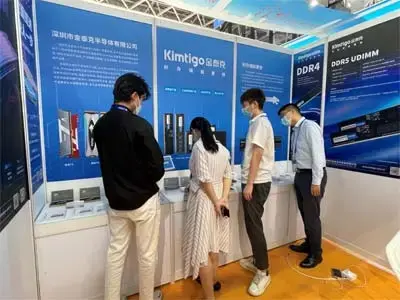 Kimtigo Participated in the 18th China-ASEAN ExpoMarch 22, 2023On September 10th, the 18th China-ASEAN Expo (referred to as: CAEXPO) with the theme of "Sharing the New Opportunities of the New Land-Sea Channel and Building a China-ASEAN Community of Shared F...view
 Robust Storage Solutions: Industrial SATA SSDs UnveiledSeptember 15, 2023In today's data-driven world, businesses and industries demand storage solutions that can withstand harsh environments, deliver consistent performance, and ensure data reliability. Industrial SATA...view
 NVMe Gen3x4 SSDs: Redefining Storage Performance StandardsOctober 16, 2023In the world of data storage, speed is everything. As our digital lives become more data-driven, the need for faster and more efficient storage solutions has never been greater. NVMe Gen3x4 SSDs are e...view
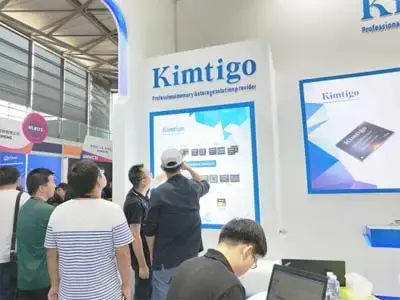 Kimtigo Will Fight Again at MWC 2019 ShanghaiMarch 22, 2023Following the IT WEEK Spring Exhibition in Japan and COMPUTEX Taipei, Kimtigo will compete again in MWC 2019 Shanghai. The highlight of this exhibition is Kimtigo's embedded series products. When ...view