EN
EN  es
es  ru
ru 
Security systems have evolved past just recording data; today, the focus is on speed and efficiency in video data retrieval. Whether you're managing high-definition footage or running simultaneous playback from multiple cameras, the storage solution you choose plays a critical role. For security professionals, IT managers, and law enforcement agencies, selecting an SSD for surveillance offers significant advantages over traditional HDDs. Here's how SSD technology transforms the way we store and access critical surveillance footage.
When investigating incidents, every second counts. Unfortunately, traditional HDDs often hinder access to important footage:
Seek Time Latency: HDDs rely on mechanical arms to locate data, leading to delays during scrubbing or reviewing footage.
High-Definition Playback Lag: Disk-based systems may freeze or drop frames when handling multiple HD channels simultaneously.
These inefficiencies can slow down investigations during crucial moments, making HDDs less reliable for modern surveillance systems.
Here's why SSDs shine when the pressure is on:
With no moving parts, SSDs electronically access precise data blocks in milliseconds. This eliminates the lag common with HDDs and allows investigators to jump to specific timestamps effortlessly.
SSDs deliver superior IOPS (Input/Output Operations Per Second), making it possible to view 4, 8, or even 16 HD video streams smoothly. For anyone managing large camera networks, this capability ensures uninterrupted, high-speed security data playback.
In the event of a security breach, the ability to quickly transfer terabytes of video data is essential. SSDs enable significantly faster data exports to external drives or cloud storage than HDDs, expediting forensic investigations.
From facial recognition to license plate tracking, advanced security systems rely on AI to analyze footage in real-time. SSDs facilitate the low-latency data processing these systems need, ensuring seamless operation.
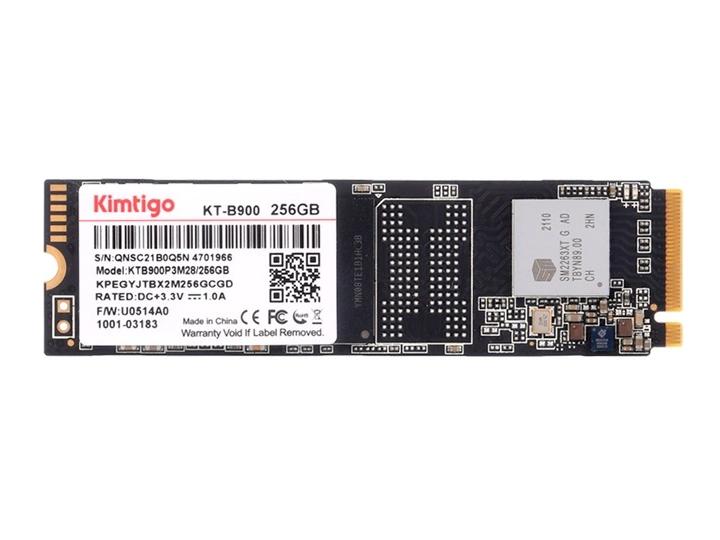
When it comes to 24/7 surveillance, SSD surveillance drives outshine HDDs by offering enhanced durability and reliability. In high-vibration environments like mobile NVRs for buses or police vehicles, SSDs are less prone to data loss compared to their mechanical counterparts. Even during extensive data retrieval, SSDs allow for uninterrupted recording, ensuring your cameras never miss a moment.
Learn more about how Kimtigo's 24/7 SSD solutions provide superior durability and performance with industry-leading features like 3D TLC NAND technology and advanced power-loss protection.
Kimtigo's surveillance-grade SSDs redefine data storage for security systems. With an impressive MTBF (Mean Time Between Failures) exceeding 1.5 million hours and optimized designs for 24/7 performance, our SSDs deliver the speed and reliability that modern surveillance demands.
Why 3D TLC NAND? Enhanced endurance and faster read/write speeds.
Zero Downtime: Power-loss protection ensures smooth operation during outages.
Maximum Workload: High TBW ratings for sustained video recording and retrieval.
If you're looking for uninterrupted recording solutions, Kimtigo's expertise ensures your system stays operational during demanding situations.
Can I use a regular SSD instead of a surveillance-grade SSD?
While consumer-grade SSDs may work initially, they aren't built for the constant workload of 24/7 NVR systems. Surveillance SSDs are designed for high durability and extended duty cycles.
Do SSDs last as long as HDDs?
Yes, and sometimes even longer. Surveillance SSDs come with high TBW (Total Bytes Written) ratings, ensuring longevity and reliable performance in continuous-use environments.
What makes SSDs better for mobile surveillance?
Shock resistance. Unlike HDDs, SSDs have no moving parts, making them ideal for use in vehicles or high-vibration environments.
In today's security landscape, storage is no longer a passive component; it's the backbone of effective investigations. Choosing the right storage solution can mean the difference between resolving an incident and missing critical evidence. With SSD surveillance technology, you're investing not just in storage, but in speed, reliability, and peace of mind.
 Server RAM Upgrade: Boosting Your Data Center's EfficiencyOctober 16, 2023In the fast-paced world of data centers, efficiency is key to success. Data centers are the backbone of modern businesses, handling vast amounts of data and applications. One of the most effective way...view
 Unleashing Lightning-Fast Speeds: Exploring the Power of Gen3x4 SSDsAugust 15, 2023In the fast-paced world of technology, where speed and efficiency reign supreme, the evolution of storage solutions has been a game-changer. One such innovation that has left its mark is the Gen3x4 SS...view
 Maximizing Performance: The Advantages of a 2280 Solid State DriveMarch 29, 2024In the world of data storage, speed and performance are paramount. As technology continues to advance, storage solutions need to keep pace with the demands of modern computing. The 2280 Solid State Dr...viewA Guide to Choosing the Perfect 1TB PCIe NVMe SSD for Your PCMarch 15, 2024Upgrading your PC's storage to a 1TB PCIe NVMe SSD can be a game-changing experience. With lightning-fast speeds and ample capacity, these SSDs are perfect for gamers, creative professionals, and anyo...viewThe Versatile 2280 Solid State Drive: Ideal For Laptops And DesktopsMarch 15, 2024When it comes to upgrading the storage in your laptop or desktop computer, the choice of a Solid State Drive (SSD) is often a wise move. Among the various SSD form factors available, the 2280 SSD has ...view
 How did A Small Semiconductor Chip Become Important for Modern Technology?March 22, 2023Speaking of technologies that connect the world, semiconductor chips have contributed a lot. The progress of human civilization has never been at such a fast pace. The most intuitive display of semico...view